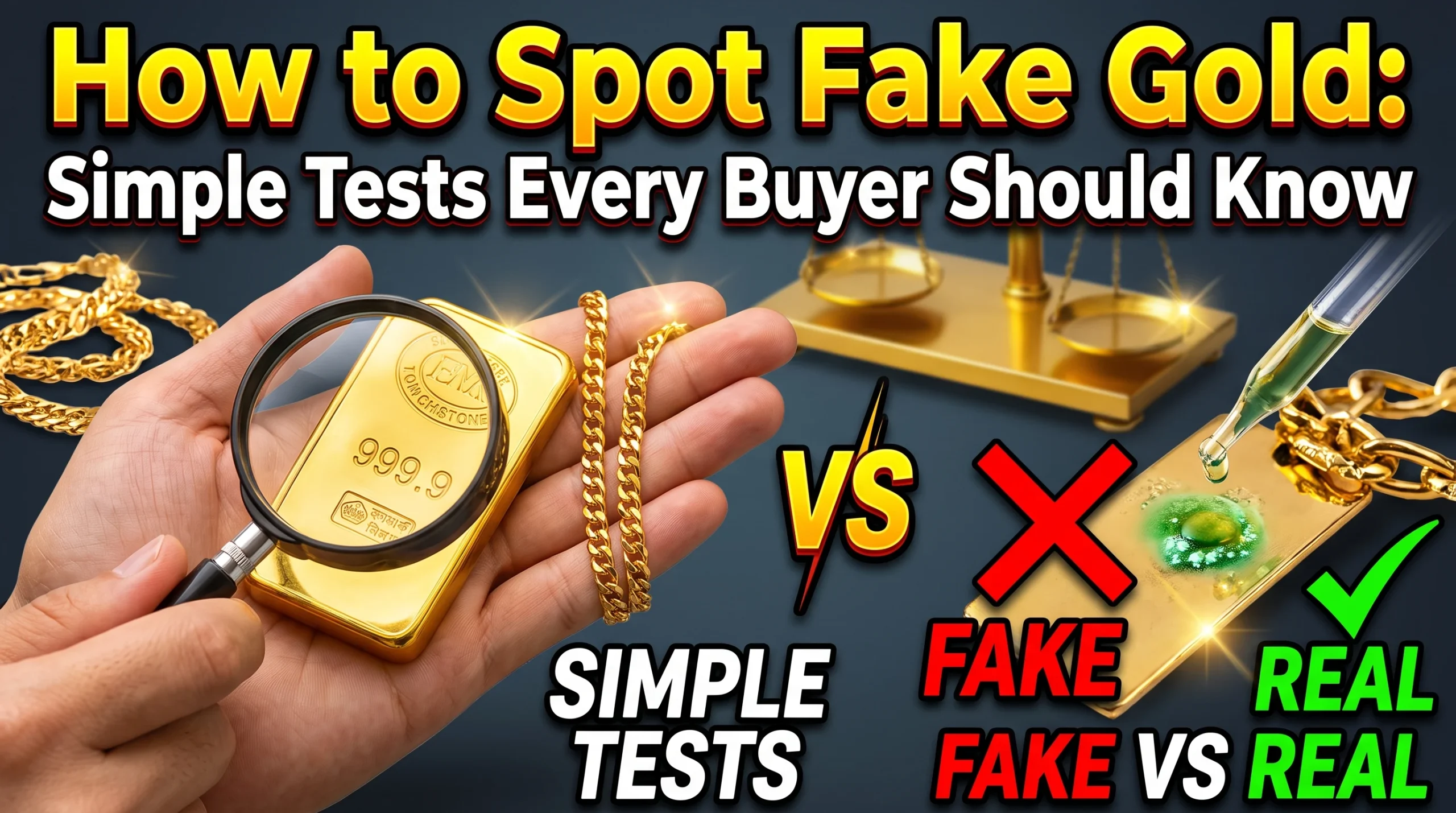
Buying gold is a big step. You want to be sure it is real. Many fake items look like the real thing. It can be hard to tell them apart. Use these simple checks to stay safe.
Gold is soft and heavy. Fake items often use cheaper metals. They might feel too light. They might not react to the world the same way as gold. You can test your gold at home today.
Start With A Visual Inspection
Look at your gold with a bright light. Search for a stamp. A stamp shows the purity of the metal. Common marks include 10K, 14K, 18K, or 24K. A lack of a mark is a bad sign.
Check the color of the gold closely. Does it look worn? If the gold color rubs off, it is likely fake. Real gold is the same color all the way through. Check for signs of base metal beneath.
Use a magnifying glass to check for wear. Look at the edges of the piece. Fake gold often shows a different color under the plating. This is a common flaw in cheap fakes found in many markets.
The Simple Magnet Test
Gold is not magnetic. Grab a strong magnet from your home. Hold it near your gold piece. If the magnet pulls the item, it is not gold. This is a fast way to test items.
Some metals like iron or nickel stick to magnets. Fakes often contain these metals. If your jewelry sticks to the magnet, do not buy it. It is likely just a metal mix with a gold finish.
Be aware that some metals are not magnetic. This test cannot find all fakes. It only rules out items that contain magnetic base metals. Use this as a first step before you try other tests.
The Ceramic Plate Test
Find an unglazed ceramic plate. Drag your gold across the surface. Real gold leaves a gold streak. A black or grey streak means the item is likely a different metal. This test is quite simple.
Be careful with this test. It can scratch your gold piece. Only use this on items you own. Do not try this on items at a store. The shop owner will not be happy about it.
This method works well for testing solid gold. It is less reliable for plated items. A thick plate might show a gold streak at first. You need to be sure the item is solid all through.
Check The Weight And Size
Gold is very dense. It feels heavy for its size. If you have a scale, weigh your piece. Compare the weight to a known real piece of the same size. A fake will feel much lighter.
You can also use the water displacement test. Fill a glass with water. Mark the level. Drop the gold in. The water level will rise. This helps you find the density of the piece of metal.
Professional dealers often use this to verify large bars. It is a precise way to check if an item is real. For small rings or chains, this might be harder to do at home.
Understanding Gold Purity Levels
Purity matters a lot when you buy gold. You should know the difference between 18K and 21K gold before you shop. Each type has a different mix of other metals for strength and color.
Knowing your purity helps you spot fakes. If a piece is marked 24K but feels too hard, it might be fake. 24K gold is very soft and bends easily. Learn more at 18K Gold vs 21K Gold: Differences in Price, Look and Durability.
Always buy from trusted shops. If you are in the area, check out the top gold shops in Muscat. Reliable sellers provide a receipt and a guarantee for every purchase you make.
| Test Type | Reliability | Risk Level |
|---|---|---|
| Magnet Test | Low | None |
| Ceramic Test | Medium | High (Scratches) |
| Weight/Density | High | None |
Common Mistakes When Buying Gold
Many buyers rush the process. They see a low price and buy fast. A deal that looks too good to be true is often fake. Always check the current market price before you commit.
Another mistake is ignoring the hallmark. Always check for a stamp. If the stamp is blurry or missing, ask questions. A professional seller will explain the marks on their gold items with ease.
Do not be afraid to ask for a test. Most shops have tools to prove purity. They can do a gold purity check for you right at the counter. This gives you peace of mind.
Professional Testing Methods
If you have expensive items, use professional help. Jewelers have electronic testers. These tools use acid or heat to check the metal. They are very accurate and do not damage your jewelry much.
The acid test is very common. The jeweler puts a tiny drop of acid on the gold. Each karat reacts in a specific way. This proves the purity of the metal in seconds for you.
Electronic testers are the new standard. They do not use harsh chemicals. They measure the electrical flow through the metal. This is a very clean way to verify your gold investment at home.
Final Thoughts On Safety
Spotting fake gold takes time and practice. Use a few tests to be sure. Never rely on just one method. Combine the magnet test with a weight check for the best results.
Buying from a known shop is your best defense. Read this guide on how to buy gold in Oman to stay informed. A little knowledge goes a long way in protecting your hard-earned money.
Keep your gold safe after you buy it. Proper care helps it last for years. Learn how to clean and store your pieces with these easy gold jewelry care tips today.
Frequently Asked Questions
Can I test gold with vinegar?
Vinegar can help. Put the gold in a cup of vinegar. Real gold will not change color. Fake gold might tarnish or change color quickly.
Is the bite test real?
Do not bite your gold. It can hurt your teeth. It is also not a good way to test for purity. Use a magnet or a scale instead.
What if my gold is magnetic?
If it sticks to a magnet, it is not pure gold. It might be a fake or a gold-plated item. Do not buy it if you want real gold.