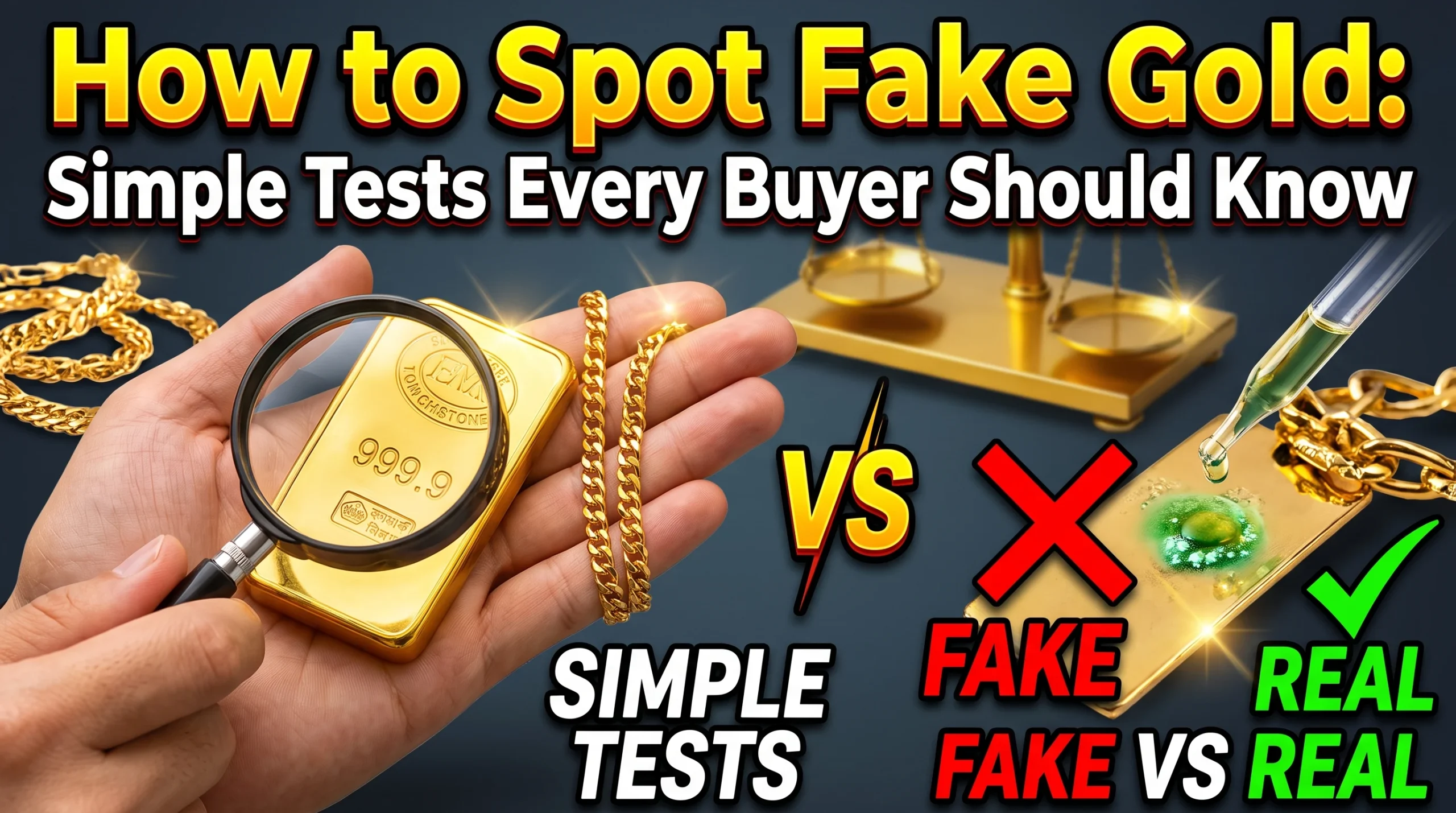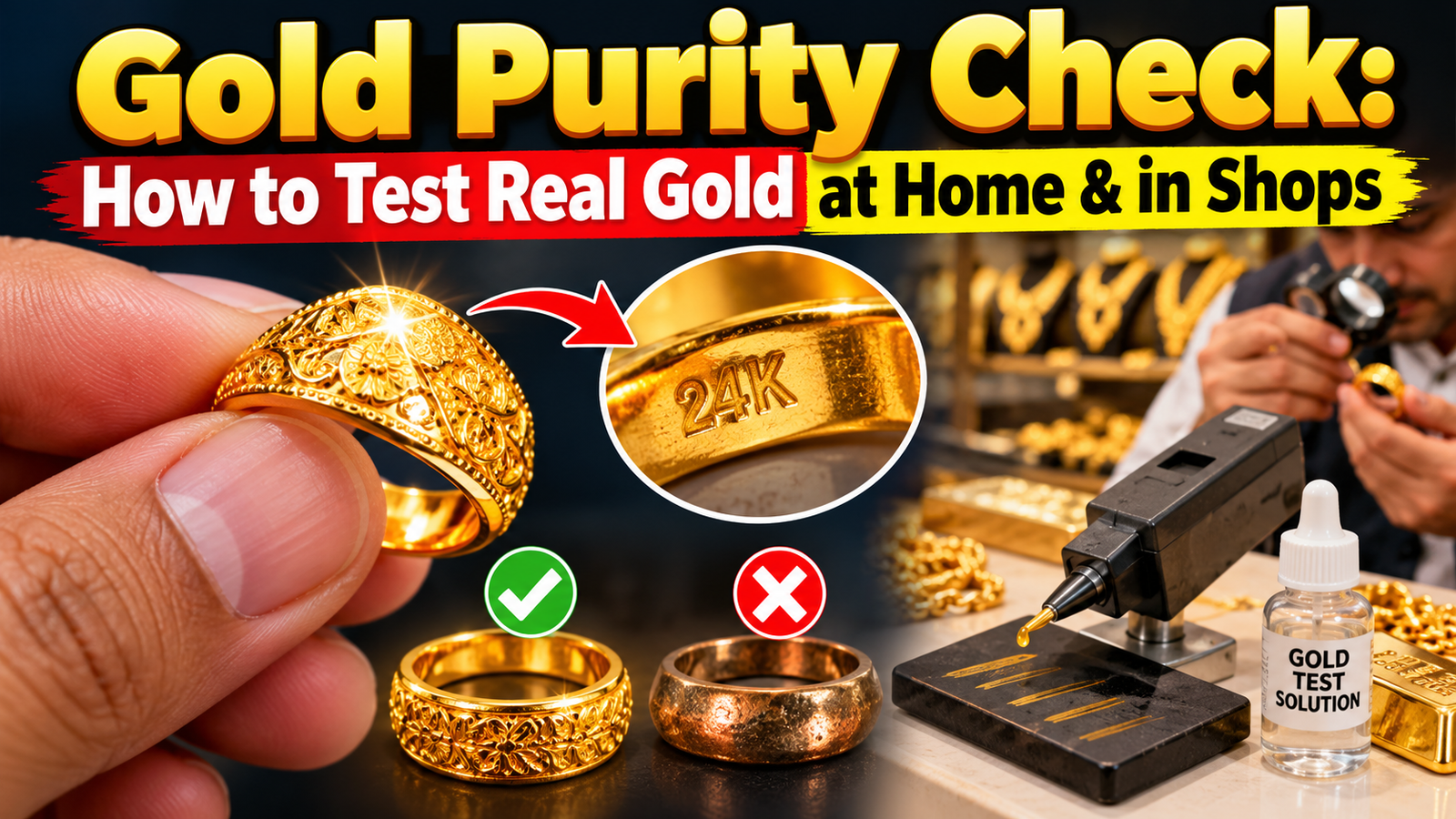
Gold is a very rare metal. Buyers want real value for their cash. A gold purity check keeps you safe from fake items. I test gold items every week. Real gold holds value for many years.
Fake gold looks bright and shiny. Sellers can trick buyers with plated brass. You must check every mark and stamp before you pay. A quick test saves money. It keeps your hard earned savings safe from fraud.
Pure gold does not tarnish or rust. It keeps its warm yellow shine forever. Base metals turn dark over time. I see many people buy fake pieces by mistake. Learning simple tests stops you from losing money.
What Is Gold Karat and Fineness?
Karat measures the pure gold in your item. Pure gold has twenty-four parts. We call pure gold twenty-four karat. It has no other metals mixed into it. It is very soft and bends with ease.
Makers mix pure gold with other metals. Copper and silver make gold hard. Hard gold makes strong rings and chains. Without other metals, your rings would lose shape fast. The mix also changes the metal color.
Fineness shows purity in parts per thousand. Pure gold has nine hundred ninety-nine parts per thousand. Twenty-two karat gold has nine hundred sixteen parts. The number tells you the real worth of the gold piece.
Most daily jewelry uses twenty-two karat metal. Some fine rings use eighteen karat gold. Lower karat items resist deep scratches well. They last longer during hard daily chores. High karat items stay soft and bend easily.
I always look at the karat stamp first. It tells me how much pure metal is inside. Higher karat means higher cost per gram. You should never pay twenty-two karat prices for eighteen karat items.
Gold Hallmark Identification Explained
A hallmark is an official stamp on gold. Testing labs place these marks on certified pieces. You can find them on the back of rings. You can see them on chain clasps with a small lens.
Old marks used simple symbols and tiny numbers. New rules require clear stamps on every item. In India, the Bureau of Indian Standards sets the rules. They test the gold before it goes to shops.
A complete mark shows three key things today. First, you see the official bureau logo. Next, you see the purity grade number. Last, you see a special six digit code made of letters and numbers.
This special code is the unique item ID. It tracks the piece back to the test lab. It shows the exact date of testing. It also names the jeweler who made the item for sale.
Look at your jewelry with a small loupe. The marks must look crisp and clear. Blurry marks often mean the piece is fake. Crooked stamps should make you pause before you buy any gold item.
The Bureau of Indian Standards HUID System
India made hallmarking mandatory for retail gold items. The new system uses a six digit code. We call this code the HUID mark. Every single piece of gold jewelry gets its own unique code.
The code gives buyers great trust and safety. Fraud sellers cannot reuse old hallmark stamps easily now. The central system logs every piece in a secure database. You can check the code on your phone.
Download the free BIS Care app on your phone. Open the app and type the six digit code. The app shows the jeweler name right away. It also shows the assay lab and the exact karat.
If the app details do not match your piece, walk away. Good shops will gladly show you the code. They let you verify it before you swipe your card. Never buy gold without this digital check.
I tell every buyer to test the code in the shop. It takes less than one minute. This simple habit keeps your gold investments safe. Clean paperwork protects your wealth when you want to sell later.
Gold Karat Purity Chart
This reference chart shows the standard purity levels for gold. Use these numbers to check stamps on coins, bars, and jewelry. The chart lists fineness, gold content, and common uses.
| Karat Rating | Fineness (Parts per 1000) | Gold Percentage | Common Hallmark Stamp | Best Use |
|---|---|---|---|---|
| 24K | 999 or 999.9 | 99.9% | 999 | Investment bars, bullion coins |
| 23K | 958 | 95.8% | 958 | Traditional wedding ornaments |
| 22K | 916 | 91.6% | 916 | Fine jewelry, chains, bangles |
| 20K | 833 | 83.3% | 833 | Vintage and antique jewelry |
| 18K | 750 | 75.0% | 750 | Diamond rings, luxury watches |
| 14K | 585 | 58.5% | 585 | Daily wear rings, durable gems |
| 10K | 417 | 41.7% | 417 | Affordable jewelry, class rings |
Check the fineness number when you shop abroad too. If you learn how to buy gold in Oman or Dubai, stamps use these same numbers. Pure bars always read nine nine nine.
You can also track market rates by Karat. Always view the gold price in Oman today or your local city rate. Knowing the pure metal weight helps you calculate the right spot price.
How to Test Gold at Home
You can test gold items at your own desk. Home tests do not replace lab tools. Still, they help spot bad fakes quickly. You need simple tools you already have in your house.
Begin with a close visual check under bright light. Look for spots where the color fades. Base metal shows under thin gold layers. Check areas around clasps and inner bands where skin rubs often.
Look at the edges of old coins and rings. Discoloration means the piece is only gold plated. Real gold keeps the same rich color all the way through. It never peels, flakes, or chips away.
Next, hold the metal piece in your clean hands. Real gold has no smell at all. Sweaty hands make brass and copper smell like old coins. If your jewelry smells metallic, it is not real gold.
Wear the item on your skin for an afternoon. Real gold does not react with sweat. Fake metal turns your skin green or black. If your skin changes color, the piece contains cheap copper or nickel.
The Magnet Test for Real Gold
Gold is not magnetic at all. It will not stick to a magnet. You can use a strong magnet to spot fake pieces. Do not use a weak magnet from your kitchen fridge.
Buy a strong neodymium magnet from a hardware shop. Place your gold jewelry on a flat wooden table. Bring the strong magnet close to the metal piece. Watch the item closely as the magnet nears.
If the piece jumps to the magnet, it is fake. The item contains iron, steel, or nickel inside. Real gold stays still on the table. It will not move toward the magnet even one bit.
Some fake items use brass or copper cores. Copper does not stick to magnets either. A piece that passes this test might still be fake. Use the magnet test as your very first check only.
Pay attention to clasps on gold chains. Clasps contain tiny steel springs inside them. The clasp might pull slightly to the magnet. The rest of the chain should show zero pull to the magnet.
The Vinegar Test for Real Gold
Kitchen vinegar is a mild acid you can use safely. It cleans real gold without causing harm. It reacts fast with common fake metals. This makes it a great home test for old items.
Clean your gold item with water and dry it well. Place the piece on a clean glass plate. Use a small eye dropper to place two drops of white vinegar on the metal surface.
Watch the wet spot for fifteen minutes. Real gold will not change color at all. The acid will not hurt pure metal. The drops will stay clear and clean on real gold surfaces.
If the metal turns black or green, it is fake. The vinegar dissolves the base metal underneath. Wash the item in cool water right after the test. Wipe it clean with a soft cloth.
Do not use vinegar on items with pearls. Vinegar destroys delicate pearls and soft gems. Use this test on plain metal bands only. Keep acid away from glued stones and fragile glass beads.
How to Check Gold Purity with a Lighter
Heat testing is an old way to check real metal. Real gold does not burn or turn black under fire. It can take high heat without changing its chemical structure. Base metals react quickly to heat.
Hold the metal piece with steel pliers. Do not hold it with your bare fingers. Light a butane lighter and hold the flame to the gold. Keep the flame on the metal for thirty seconds.
Real gold gets hot but stays bright yellow. When it cools down, the shine remains. Cheap metals turn dark gray, brown, or smoky black. Heat makes copper and iron react with air right away.
Be very careful when you test hollow jewelry. High heat can melt delicate solder joints. Do not overheat thin chains or hollow bangles. Stop right away if you smell plastic or burning paint.
Let the metal cool down on a stone tile. Never drop hot gold into cold water. Rapid cooling can warp fine jewelry items. Only use a clean flame that leaves no dark soot behind.
Water Density Test for Gold
Gold is one of the densest metals on earth. Real gold feels very heavy for its small size. You can measure this density using simple water. This method uses the famous rule found by Archimedes.
You need a digital gram scale for this test. The scale must measure down to two decimal places. You also need a small cup of water and thin nylon thread. Keep your workspace dry.
First, weigh your dry gold piece on the scale. Write down the exact weight in grams. We call this number dry weight. Make sure the scale reads zero before you place the gold on it.
Next, place the cup of water on the scale. Press the tare button to reset the scale to zero. Tie the thin thread around your gold ring. Hold the thread with a steady hand.
Lower the gold into the water slowly. Do not let the gold touch the bottom or sides of the cup. The gold must hang fully under the water. Write down the new weight on the screen.
Divide the dry weight by the submerged weight. This number is the density of your metal. Pure twenty-four karat gold has a density near nineteen point three grams per milliliter. It never changes.
Twenty-two karat gold has a density near seventeen point seven. Eighteen karat gold sits near fifteen point five. If your result is under thirteen, the item is not real gold. It has too much base metal.
This test works on solid gold pieces only. Hollow jewelry traps air bubbles inside the piece. Air bubbles make the density number read too low. Make sure no stones or hollow parts ruin your test math.
Gold Scratch Test and Nitric Acid Testing
Jewelers often use a scratch test with acid. It gives very accurate results in minutes. You need an unglazed ceramic tile and an acid test kit. You can buy these kits online at low prices.
Take an unglazed ceramic tile from a craft shop. Rub your gold piece across the rough surface firmly. Leave a visible metal streak on the tile. The line should be one inch long.
Look at the color of the streak on the tile. Real gold leaves a bright golden yellow line. Base metals like pyrite or brass leave a dark black or gray line. This visual check takes two seconds.
Now, test the golden line with nitric acid. A gold acid test kit contains bottles for different karats. The bottles contain mixed acids of varied strengths. They match ten, fourteen, eighteen, and twenty-two karat.
Drop a tiny drop of fourteen karat acid on the streak. If the line vanishes, the gold is under fourteen karat. If the line stays bright, test it with eighteen karat acid next. Move up step by step.
When the acid dissolves the mark, you found the limit. If eighteen karat acid dissolves the line, the gold is fourteen karat. If the line resists twenty-two karat acid, the metal is very pure.
Never place strong acid directly on your jewelry. Acid leaves a dark burn mark on fine metal. Always test the streak on the stone tile instead. Wear rubber gloves to protect your hands from burns.
Wipe the testing stone clean after every test. Use baking soda and water to neutralize old acid. A clean stone keeps your next test accurate. Store acid bottles in a cool, dark, childproof box.
How Do Jewelers Test Gold Purity?
Jewelers use modern tools to test gold with zero damage. They do not need to scratch your jewelry. Their tools give exact readings down to two decimal places. Professional checks protect both buyer and seller.
One common shop tool is an electronic gold tester. It uses gel and electrical signals to test the metal. The probe touches the clean gold piece. The screen displays the exact karat rating in five seconds.
High end shops use XRF spectrometer machines. XRF means X-ray fluorescence testing. The machine shoots safe X-rays at the metal sample. Atoms in the gold bounce energy back to a digital sensor inside.
The XRF machine measures the energy waves from the gold. It reads the full chemical mix of the item. It lists the exact share of gold, silver, copper, and zinc. It does this without leaving any mark.
Refiners use the fire assay method for large bars. They melt a small sample of the metal in an oven. They separate pure gold from all other alloys. Fire assay is the most accurate test in the world.
Ask your local jeweler to scan your gold items. Most jewelers do an XRF scan for a tiny fee. Some shops do it for free if you buy something. It gives you complete peace of mind.
24K vs 22K Gold Purity Test Differences
Telling twenty-four karat apart from twenty-two karat requires care. Both have very high gold content. Both look bright and rich to the eye. You must check small physical differences to tell them apart.
Twenty-four karat gold has a deep, warm orange yellow tone. Twenty-two karat gold looks slightly brighter yellow. The copper and silver in twenty-two karat metal alter the tone. Side by side, the difference is clear.
Pure gold is soft enough to scratch with a fingernail. It bends under gentle thumb pressure. Twenty-two karat gold feels much firmer in your hand. It holds sharp ring details better than pure metal can.
Listen to the sound when dropped on wood. Pure twenty-four karat gold makes a dull thud. It does not ring like a bell. Twenty-two karat gold rings with a higher pitch because of alloy metals.
Check the hallmark stamp on the inner band. Twenty-four karat gold bears the nine nine nine mark. Twenty-two karat gold shows the nine one six stamp. The stamp remains the fastest way to confirm purity.
Strengths and Weaknesses of Gold Testing Methods
Every gold testing method has pros and cons. Some tests cost nothing but lack precision. Other tests give exact readings but require pricey tools. Compare these testing methods before you test your jewelry.
| Testing Method | Accuracy Level | Risk of Damage | Cost to Perform | Best For |
|---|---|---|---|---|
| Visual Hallmark Check | High (with app) | None | Free | Buying new hallmarked jewelry |
| Magnet Test | Low | None | Very Low | Quick screening of cheap fakes |
| Water Density Test | Moderate to High | None | Low (scale needed) | Solid gold bars and plain bangles |
| Nitric Acid Scratch Test | High | Minor (surface wear) | Low to Medium | Scrap gold, old unmarked jewelry |
| Electronic Gold Tester | High | None | Medium | Pawnshops, estate jewelry buyers |
| XRF Spectrometry | Very High | None | High (shop fee) | High value items and large bars |
Home tests work well for a quick check. They help you avoid obvious fake items at markets. But home tests cannot give you a certified purity number. They cannot measure tiny alloy changes.
Professional lab testing costs more money. Still, it gives you legal proof of metal value. When you sell gold, buyers want real proof. Use professional XRF tests for high value investments and coins.
Smart Buying Tips for Gold Investors and Buyers
Always buy gold from licensed sellers. Good jewelers display their bureau license on the wall. They offer clear bills that list gross weight and net weight. They write down the exact purity on the invoice.
Check the making charges on your bill. Making charges cover the labor to shape the piece. Simple coins have low making charges. Complex necklace sets carry higher fees. Always negotiate these charges before you pay.
Insist on an itemized tax invoice for every purchase. The invoice must list the unique HUID number. It must show the daily gold rate per gram. This receipt protects you if you ever sell the item.
Ask about the shop buyback policy before buying. Reputable shops buy back their hallmarked gold at full market value. They only deduct making charges and taxes. Clear buyback rules protect your wealth over time.
Never buy gold in dark street markets. Unofficial dealers sell cheap plated items with fake stamps. If an offer sounds too good, it is likely a scam. Stick to established brands with verified hallmarking.
Store your gold items in separate soft cloth bags. Gold scratches when it rubs against harder gems like diamonds. Keep your purchase receipts in a safe place. Clean paperwork makes reselling easy and stress free.
Summary of Gold Purity Verification
Checking gold purity protects your money. Start by checking the official hallmark stamps. In India, look for the BIS logo, fineness number, and HUID code. Verify the code with the official mobile app.
Use simple home tests for fast screening. A strong magnet spots cheap steel cores right away. The water density test checks solid metal pieces without damage. Acid tests confirm purity on old, unmarked jewelry.
Visit a jeweler for high value items. An XRF scan tells you the exact metal mix in seconds. It leaves no scratches or acid stains on your fine pieces. It gives you total peace of mind.
Always demand an itemized invoice when you buy gold. Make sure the bill matches the stamps on your jewelry. With these simple habits, you will always get the real gold you paid for.
Frequently Asked Questions
Can real gold stick to a magnet?
No, real gold will never stick to a magnet. It is not magnetic. If your jewelry pulls to a magnet, it contains base metals like iron or nickel. The item is likely fake or gold plated.
What does 916 mean on gold jewelry?
The number 916 means twenty-two karat gold. It indicates nine hundred sixteen parts of pure gold per thousand parts. The other eighty-four parts are alloy metals like copper and silver to give the piece strength.
Does the vinegar test hurt real gold?
Vinegar does not harm real gold at all. Pure gold does not react with mild acetic acid. If the metal changes color or turns dark, the item is made of fake base metals or cheap plating.
How do I verify a BIS HUID number?
Download the free BIS Care app on your smartphone. Open the app and enter the six digit code stamped on your jewelry. The app displays the jeweler name, assay center, and exact karat purity instantly.
Can fake gold have a hallmark stamp?
Yes, dishonest sellers can stamp fake numbers on cheap metal. That is why you should verify the new six digit HUID code in the BIS Care app. Real codes match the official database records perfectly.